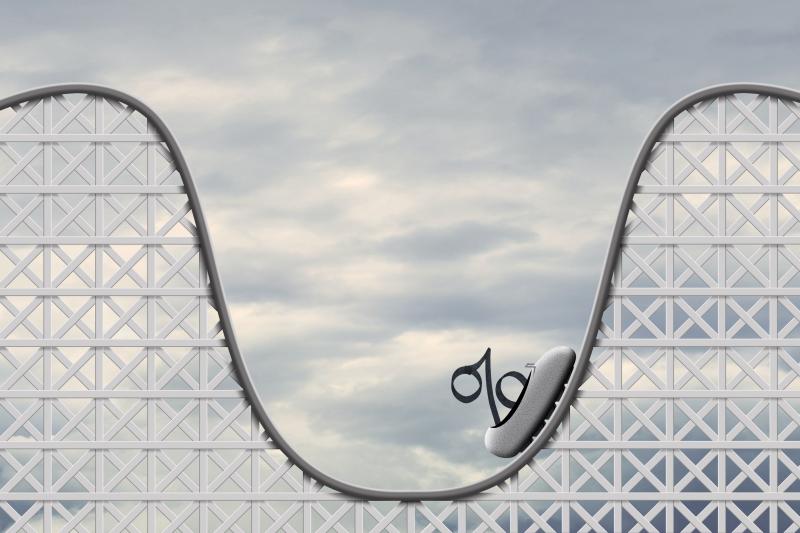
The Trouble with Liquidity
| Nov 28th, 2011 | Filed under: Alpha Strategies, Hedge Fund Industry Trends, Hedge Fund Strategies, Institutional Investing, Today's Post | By: bswarup |
|

Liquidity has become a virtue of late.
Hedge funds fill their monthly letters and conference calls with details of how quickly they can liquidate their portfolios within increasingly shorter timescales. Many managers now have strict stated limits on their ability to take so-called illiquid investments. Investors are focusing more on liquidity throughout their due diligence and the flow of funds to ‘liquid’ strategies reflects their growing domination. The number of funds offering monthly, weekly, daily liquidity multiplies by the day in response. And regulators actively champion this hunt for liquidity as an aspiration for the financial community.
That is frightening. Though a virtue in moderation, liquidity rapidly becomes a vice in excess.
On the surface, the reasons for this paradigm shift are easy to fathom. Investors – be they direct (like funds) or removed (institutional investors) – increasingly want the ability to recover their money at short notice, particularly if there are any unexpected downturns. There is a growing appreciation that to get to the long-term return, one has to navigate successfully through the short-term and for most, that means having ample liquidity in your portfolio. Many are also still nursing painful memories of 2008 and the sudden inability to realise their investments. Like religion and politics, gates and side-pockets have become sensitive topics best avoided in polite company today. More…
To continue reading this article please login (at the right) or click here to learn more about accessing our archives.
Author Bio:
Dr Bob Swarup oversees alternatives, thought leadership and risk management at Pension Corporation, a leading player in the pension buyout space. He sits on the Advisory Board at Adveq, a leading European private equity fund of funds, and is a member of the CAIA Exam Council. Bob has written extensively on diverse topics across the financial spectrum, most recently working with Bloomsbury Publishing to put together QFINANCE - a book of essays on all aspects of global finance by leading academics, policymakers and practitioners across the world. He is currently a Visiting Fellow at the London School of Economics and is writing a book on financial crises to be published by Bloomsbury in 2012.


[...] - Too much liquidity makes Jack a bad investor. [...]
[...] The trouble with liquidity. (All About Alpha) [...]
[...] – The trouble with liquidity. [...]
[...] The Trouble with Liquidity | AllAboutAlpha: Hedge Fund Trends & Alternative Investment Analysis [...]
[...] The trouble with liquidity [...]
Bob – your analysis well presented and spot on. Investors want liquidity because it gives them the option to exit what looks like a bad investment. Sometimes they will be right, sometimes they won’t. Clearly this preference for liquidity paired with extreme nervousness is fuelling herding behavior among investors. As a consequence of this, market volatility will stay quite high for the foreseeable future. And yes, illiquid investments are currently broadly ignored.
This being said, I don’t share your conclusion, for two reasons.
First, this behavior is fully coherent with the extremely high uncertainties that we are all facing at this moment in time. Rather than panicking, investors are reacting rationally by hoarding cash and having a preference for liquid investments. Global de-leveraging has first deflationary effects, so asset prices must go down. There will be lots of ups and downs in this downtrend, so the only way to generate decent returns is to pursue absolute return strategies exploiting this volatility. Second, I don’t think that now is the right time to allocate to illiquid investments, even though prices might look attractive. I believe that they will look much more attractive a few months, or possibily even a few years from now. As usual the bottom will be hard to recognize real-time, but I am convinced it lies still quite far ahead. Just ask yourself: would you buy US property today?
Robert, Thanks for the comments and glad you enjoyed the piece. In response to your two comments, I agree re the investor focus on uncertainty, hence my assertion above that uncertainty now dominates over risk and carries greater emotional weight. The behaviour itself may be rational at an individual level but still leads to herd behaviour and an overall panic. The best analogy I can think of is when geese fly in formation. If one or two individually begin to change direction, the others around them respond in kind till suddenly, the whole formation has turned left or right – a stunning example of unconscious herd behaviour.
Re timing, fundamentals always will matter and I wouldn’t be a buyer of US property either! However, the illiquidity premium for good quality assets is greater now than it has been for some significant time, viz. all the stuff coming off bank balance sheets as they deleverage. The overwhelming need for liquidity on their part means that the rare providers of liquidity have an enormous pricing advantage.