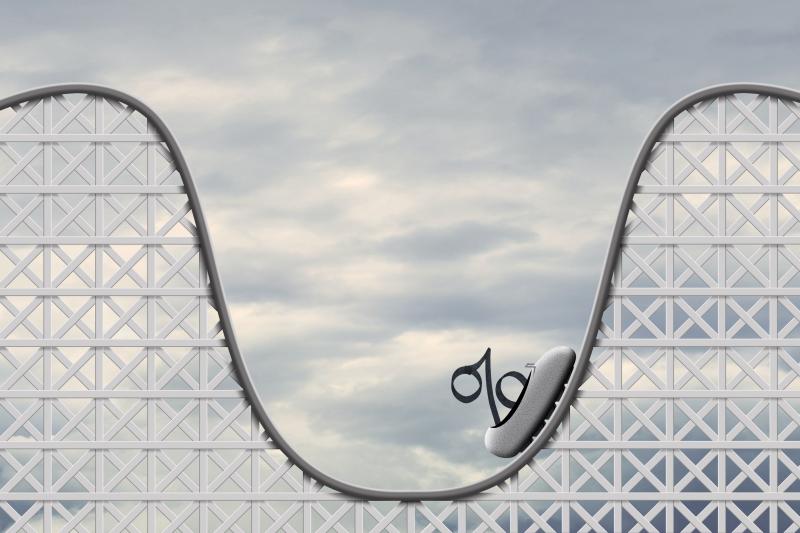
“Have a contingency plan for 750-1000 bank failures over the next six months”: Leading Academic

Sep 30th, 2008 | Filed under: Featured Post

Campbell Harvey is likely the world’s most-read finance professor.  Not only is he the Editor of the Journal of Finance - one of the world’s most cited academic journals - but he is also the author of one of the first and largest web glossaries of financial terminology.  Not only is the Duke professor prolific, but he is also fast - really fast.  In fact, Harvey released an academic article on the bailout plan last Friday at 4pm, only days after the plan was conceived (and, it turned out, only days before its death).

With a sense of urgency not usually associated with academia, Harvey basically implores“Batten down the hatches before the storm hits!”

Harvey focuses on TARP - The Troubled Asset Relief Program - which is section one of the (now failed) rescue plan.  Writes Harvey:

“The Trouble Asset Relief Program (TARP) is an insufficient policy initiative to end the current credit crisis. The measures that I propose below call for a fundamentally different approach to dealing with troubled assets, the recapitalization of the FDIC and moves to reduce bank runs, mechanisms that the Federal Reserve and Treasury need to put in place to deal with the inevitable surge in bank failures, and a proposal for a Bank Capitalization Fund that would jump start our credit system. So far, policy makers have reacted to one crisis after another. My proposals are proactive and are guided by lessons learned in previous financial crises, in particular the Swedish banking crisis.”

He also warns about the effect of mark-to-market accounting for banks (see lead AllAboutAlpha.com post today):

“While most of the focus has been on Wall Street, there are hundreds, if not a thousand banks, that may be insolvent if their assets, which include capital market instruments, were marked-to-market.”

And he rails against the plan (at least in its form at 4pm Friday on September 26th):

“It is naïve to think that the $700 billion TARP program will solve our financial crisis. In addition, there are some serious flaws with the current TARP proposal.”

Harvey goes on to give a forceful and cogent argument for more action.  He proposes that the government not pay “hold to maturity” values for troubled assets (which he calls “unrealistic and awkward”), but instead uses a valuation model with a 3-5 year window.  This, he argues, would be a fair price and would cost less than $700 billion.

He disagrees with the plan’s reliance on the private sector to administer the program and suggests that the government should be able to hire some great recently-laid-off talent to do it internally.

To make a more immediate impact on credit markets, Harvey proposes a Bank Capitalization Fund that would buy equity in surviving banks, then sell it back to them by 2013.

The FDIC, says Harvey “dodged a bullet” with WaMu and should be recapitalized now “to get in front of the problem”.  He also advocates raising the deposit protection limit to $300,000 from its current $100,000 per account.

He also recommends re-establishing the Resolution Trust Corporation now since “we need a system in place to deal with the problems quickly.”

One comment
Leave a comment »

  1. Campbell Harvey might be the widest read professor in financial stuff but he is completely wrong in 750 to 1000 banks going to the FDIC in the next six months.

    From the financial point of view he is likely very right: from the financial point of view it could be true that 750 to 1000 banks dive under the 8% rule for taking in reserves.

    I think the Harvey guy only understands finance and not the broader picture:

    The FDIC only takes action when the 3% threshold on reserves is taken.
    Beside this the SEC is sitting on the sidelines with forbidding that evil ‘mark to market’ rule 157.

    Furthermore the Americans are a so called ‘vivid and thriving’ economy so they will pump up at least a 1000 things preventing the insights of the Harvey guy get real.

    At most we will have 10% of this meaning 70 to 100 bank failures but to be honest I do not see such stuff in practice materializing over the next 6 months…

    America is very simple to understand: When a 100 banks every 6 months is too expensive it will not happen in the public domain. It will happen in future finance stuff until they cannot borrow anymore…

Leave Comment